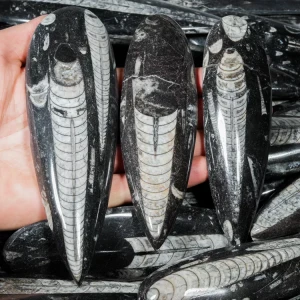
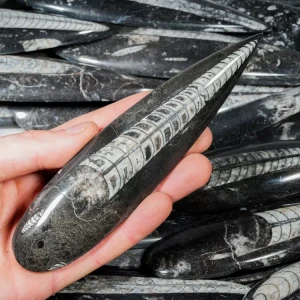


Orthoceras from Morocco – Natural Fossil (Devonian, approx. 390 million years ago)
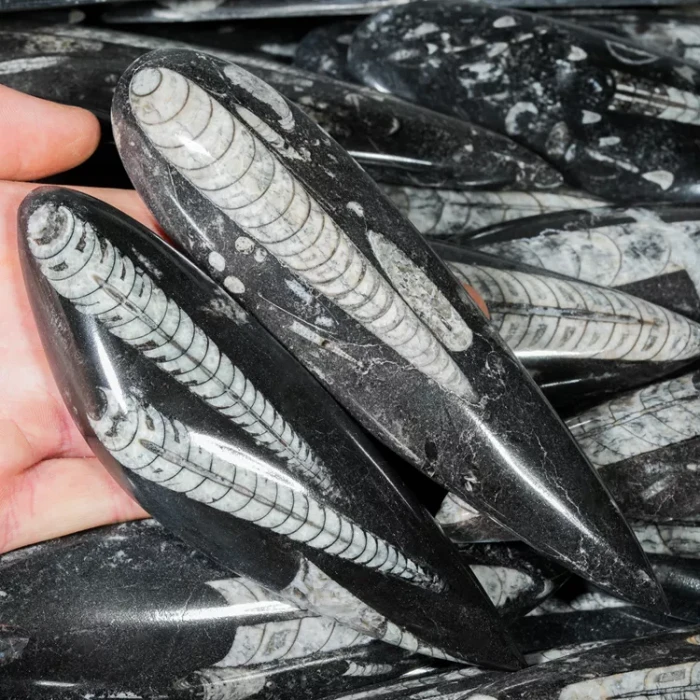
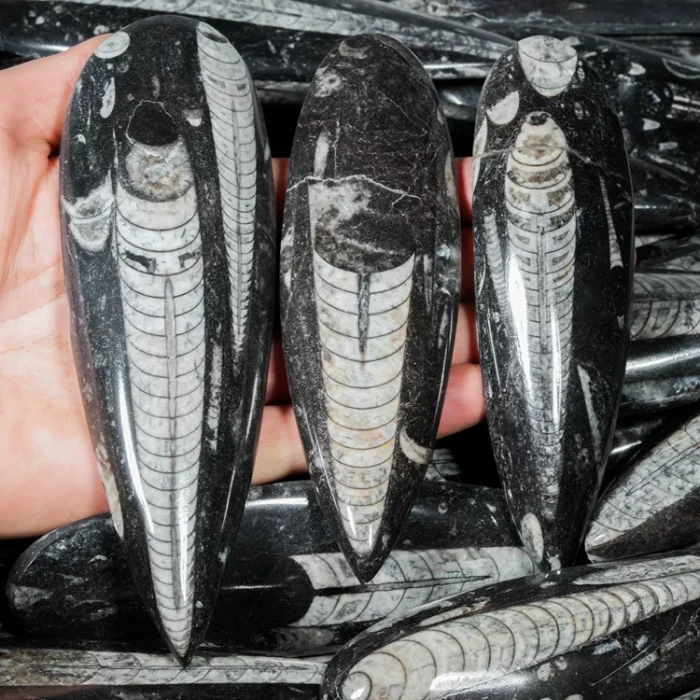
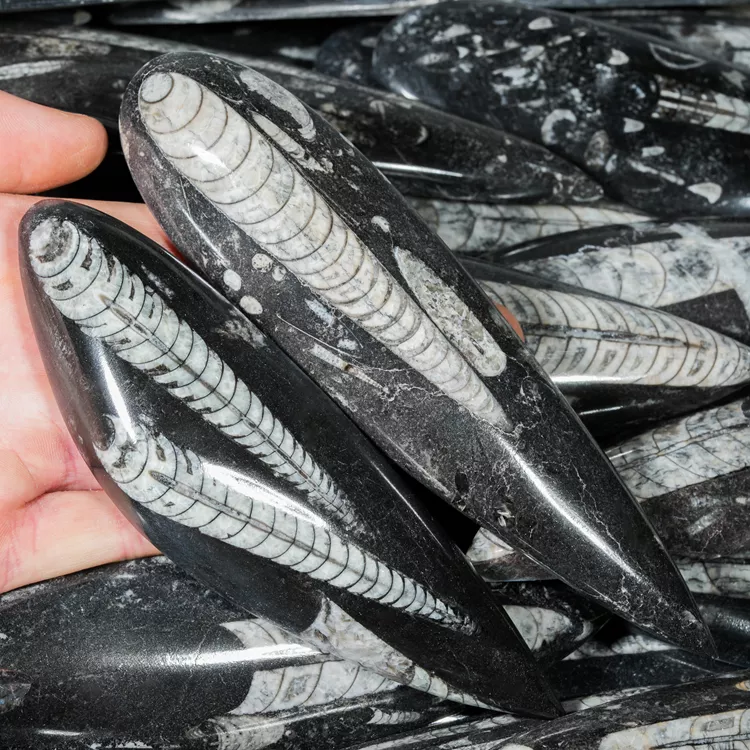
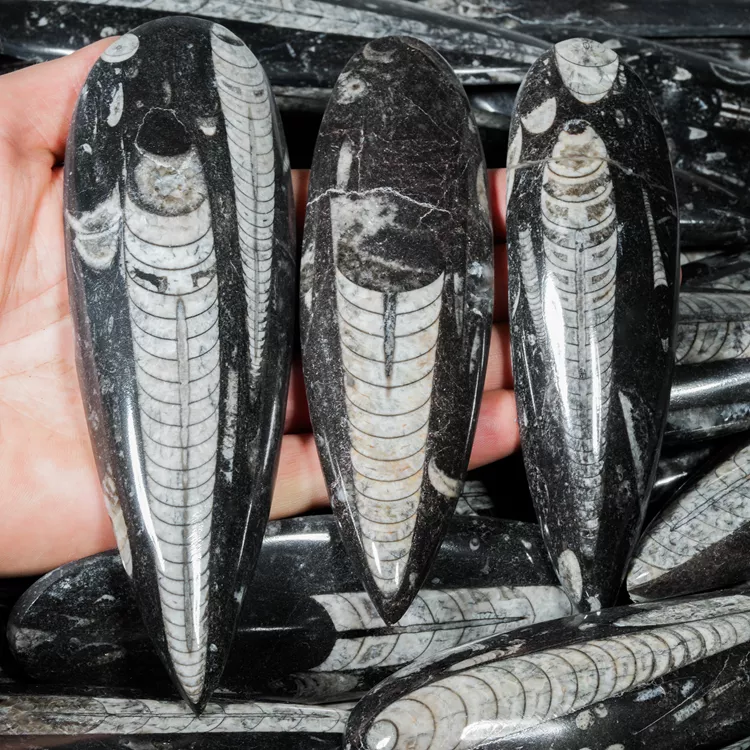
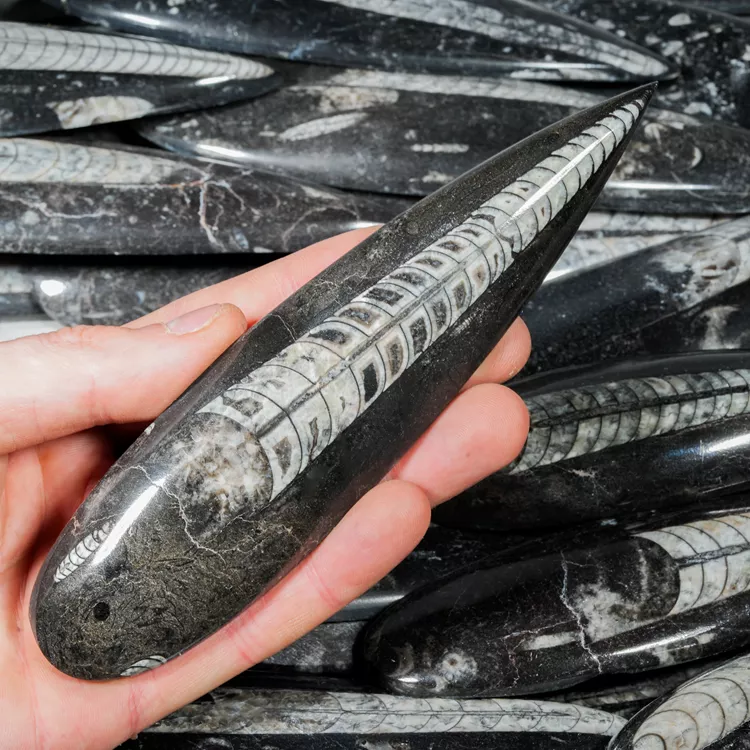
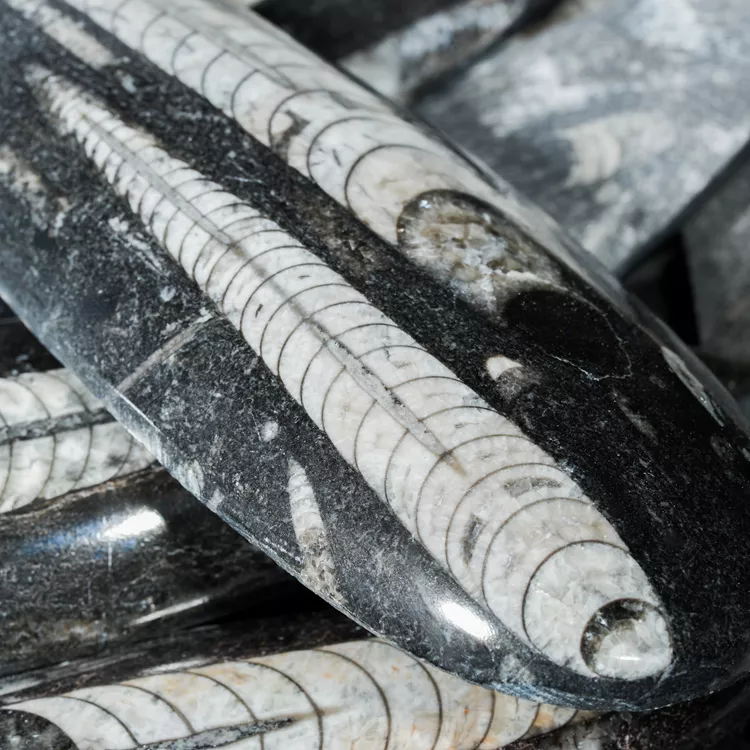
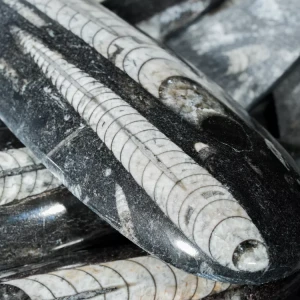
We present a remarkable, authentic fossil of an extinct cephalopod of the genus Orthoceras, embedded in black bituminous limestone and shaped into an aesthetically pleasing teardrop form. The specimen originates from Devonian sediments in Morocco (Erfoud region / Sahara Desert) and is approximately 390 million years old. The entire specimen has been precisely cut and polished to a deep gloss, revealing the light-colored, chambered structure of the prehistoric shell.
Product Specifications:
- ✓ Organism: Orthoceras (extinct conoidal cephalopod)
- ✓ Geological age: Devonian (Paleozoic Era, approx. 390 million years)
- ✓ Origin: Morocco, Erfoud Region (Atlas Mountains / Sahara Desert)
- ✓ Host rock: Black bituminous limestone
- ✓ Preparation: Tear-shaped polished rock specimen
- ✓ Specimen length: approx. 140–200 mm
- ✓ Sales policy: Random selection (price per piece)
- ✓ Intended use: Paleobiological exhibit, decoration, unique educational gift
Geological Fact: Predators of the Prehistoric Oceans
Orthoceras (from the Greek: “straight horn”) is a distant ancestor of today’s nautiluses and cuttlefish. During the Paleozoic Era, nearly 400 million years ago, when the area of today’s Sahara Desert in Morocco was the floor of a warm ocean, these creatures floated in the water, hunting smaller organisms. Their long, conical shell was divided into a series of transverse chamber partitions (septal partitions). The cephalopod inhabited only the last, oldest chamber, while it regulated the gas and fluid in the remaining chambers via a central canal (siphon), thereby controlling its buoyancy—acting as the prototype of a modern submarine!
Information for the Buyer
The item for sale is 1 piece of natural, polished orthoceras in a teardrop shape from Morocco. Since each fossil was formed in the rock differently millennia ago, individual specimens vary in their detailed patterns. The photos in the gallery show sample specimens from the lot being offered.