


A Mosasaur Tooth in Its Native Rock – Morocco (Cretaceous, 70 million years ago)
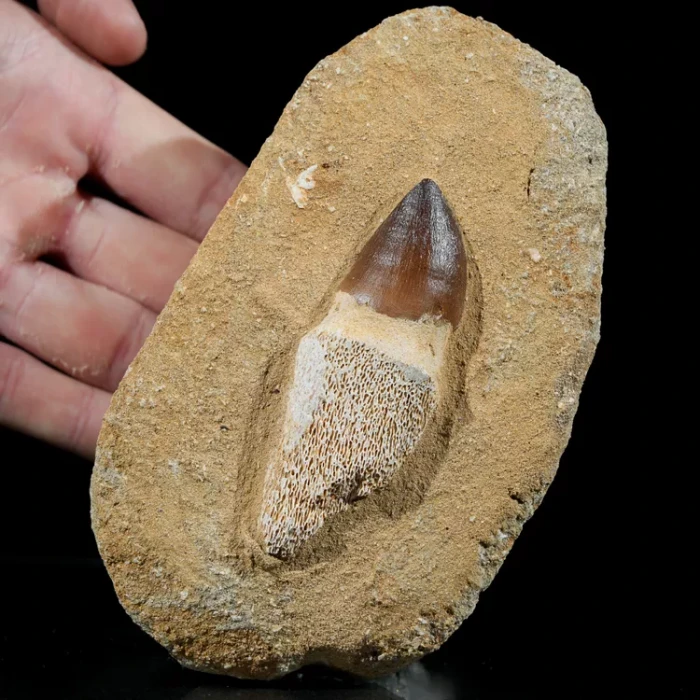
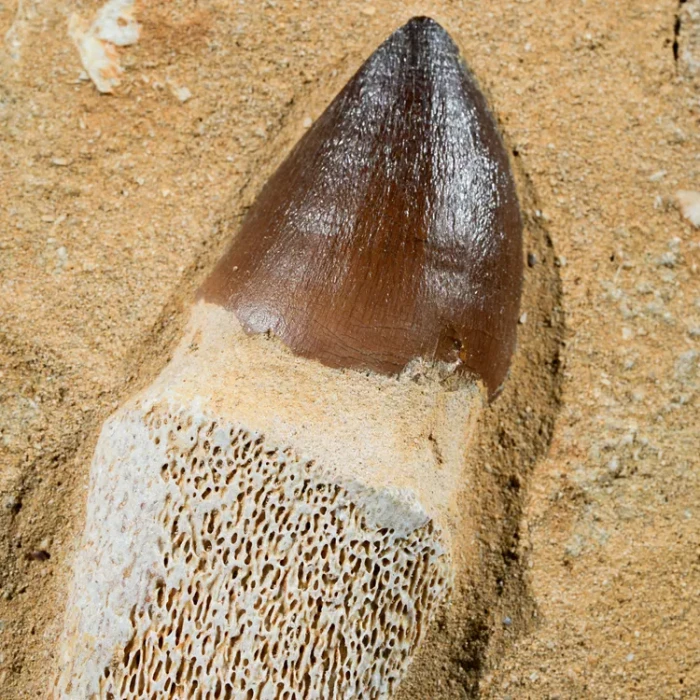
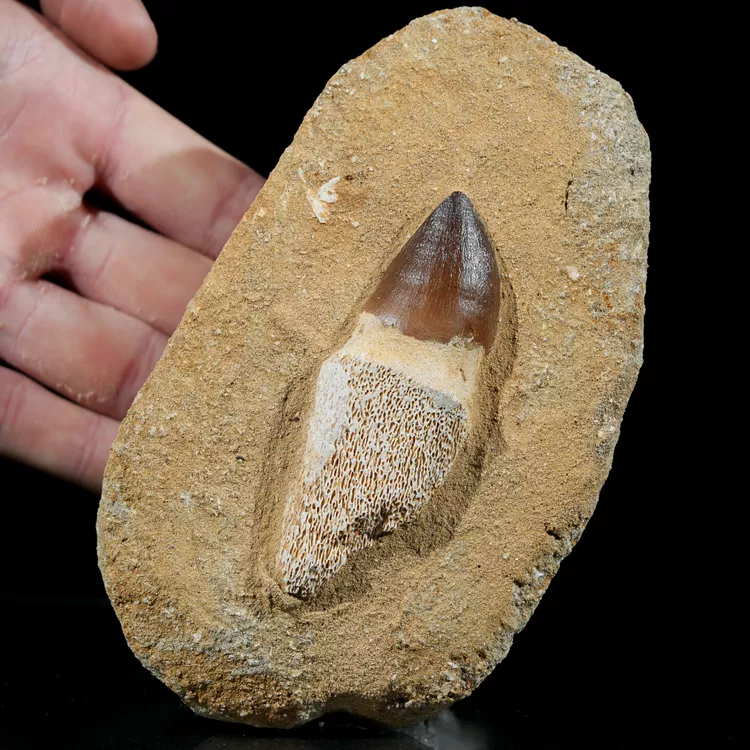
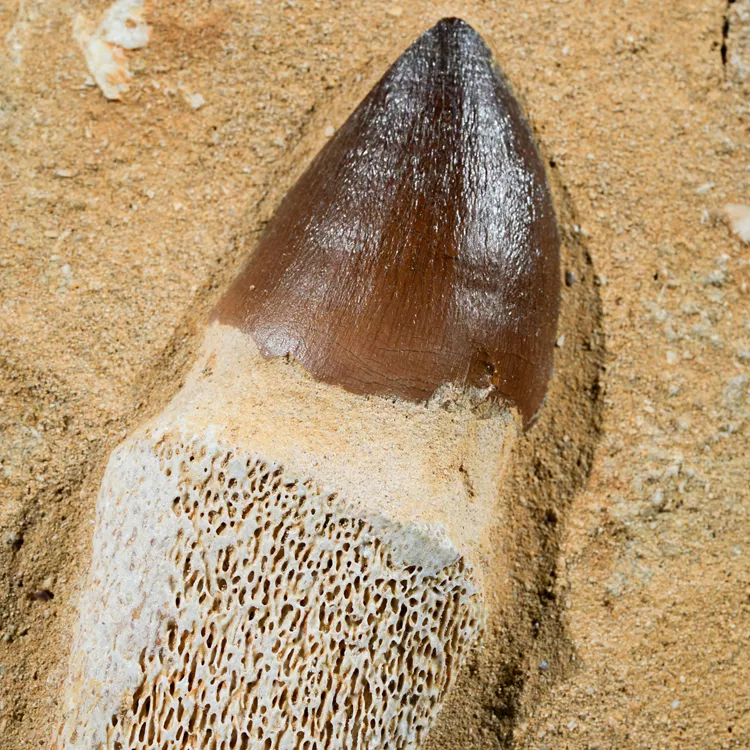
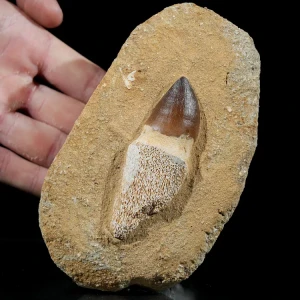
We present an original tooth of a predatory marine reptile—the mosasaur (species Mosasaurus anceps)—embedded in a natural fragment of its host rock (surrounding phosphate sandstone). The specimen comes from the famous Mauritanian phosphate basins near Khouribga in Morocco. The fossil is dated to the Late Cretaceous (Maastrichtian, approximately 70 million years ago). The tooth has been preserved along with the rock matrix in which it was mined, giving it exceptional exhibition and scientific value.
Specimen parameters:
- ✓ Organism: Mosasaur (Mosasaurus anceps) – crown tooth
- ✓ Age: Late Cretaceous / Maastrichtian (approx. 70 million years)
- ✓ Origin: Khouribga, Morocco
- ✓ Host rock: Compact sandstone / phosphorite matrix
- ✓ Rock matrix dimensions: approx. 145 × 85 × 28 mm
- ✓ Tooth dimensions: approx. 82 × 32 mm
- ✓ Total weight: 490 g
- ✓ Availability: One-of-a-kind specimen (you are purchasing the exact specimen shown in the photos)
Paleontological and Geological Characteristics
Mosasaurs were powerful, apex marine predators of the Cretaceous period, inhabiting the ancient Tethys Ocean. The teeth of the species Mosasaurus anceps are distinguished by their strong, conical structure, adapted for grasping and crushing the armor and bones of their prey. The crown of the tooth visible in this specimen features distinct cutting edges (carinae) and well-preserved, smoothed enamel with a natural dark color that contrasts sharply with the sandstone-phosphorite matrix.
Authenticity and Exposure in the Rock
Preparation of the specimen involved carefully exposing the tooth crown from the surrounding sandstone sediment without detaching it from the matrix. The flat shape of the matrix makes it easy to display it stably on a stand or to place it in a display case with a paleontological collection.
Purchase Information
The item offered is exactly this single specimen of a mozasaur tooth in its host rock, as shown in the photo gallery.


 Log in with Google