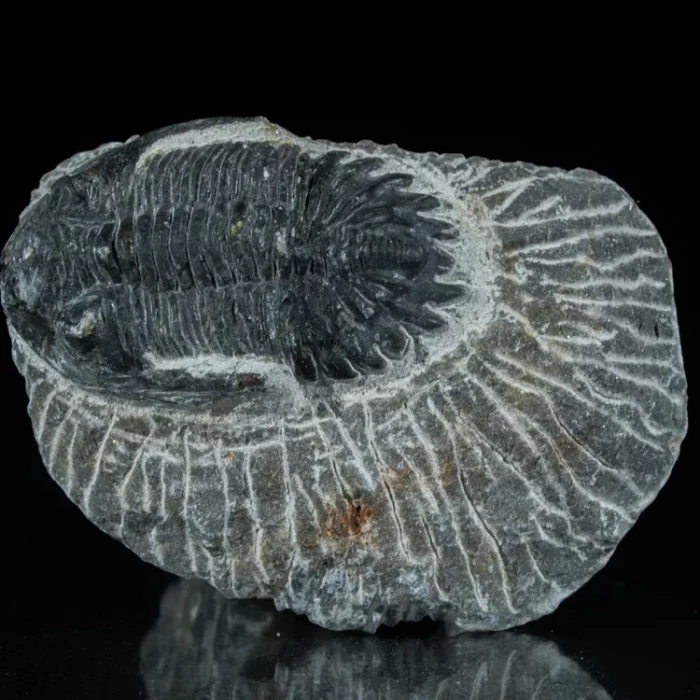





Original Hollardops Trilobite on Rock – Devonian, Morocco – Collector's Specimen
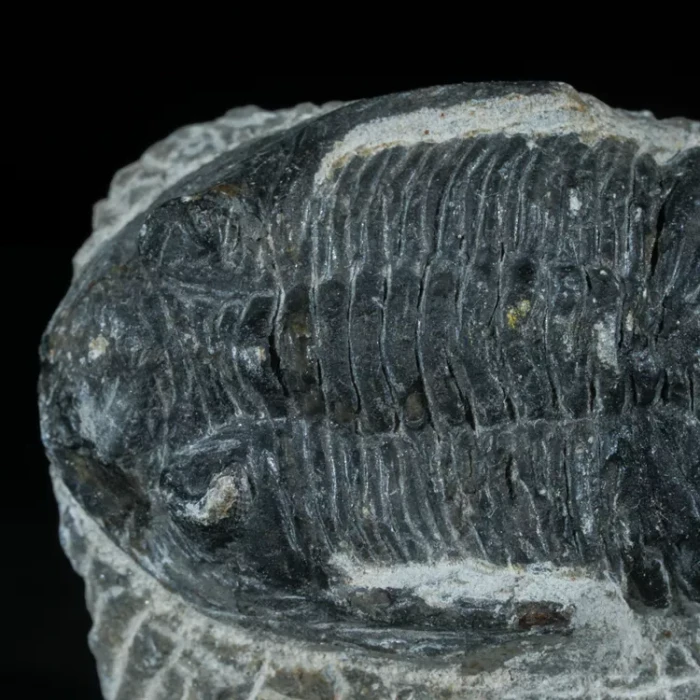
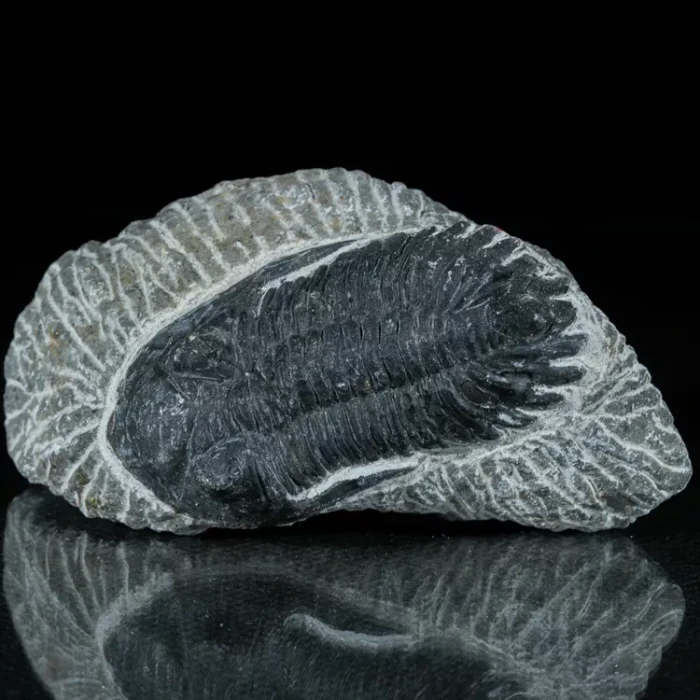
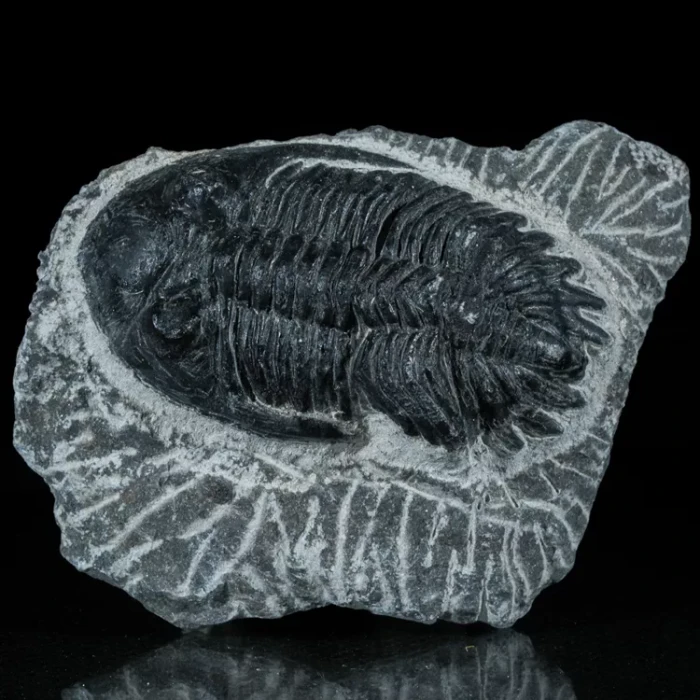
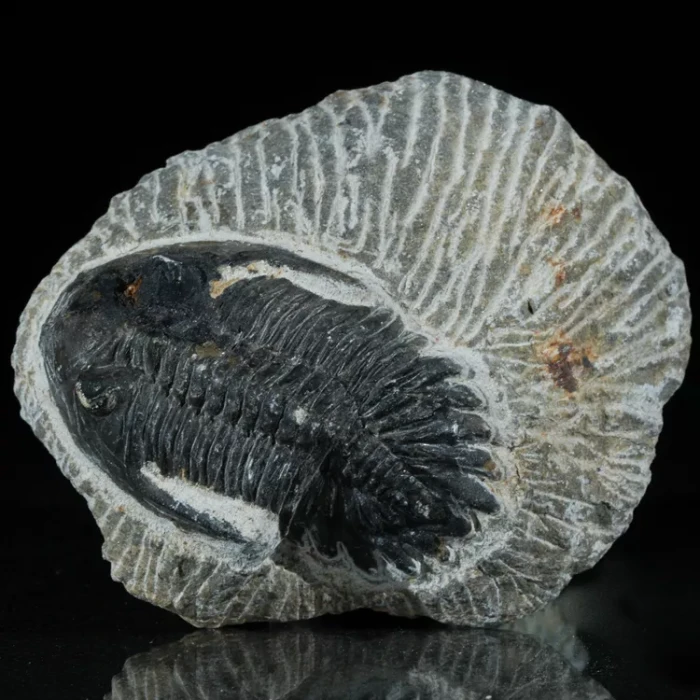
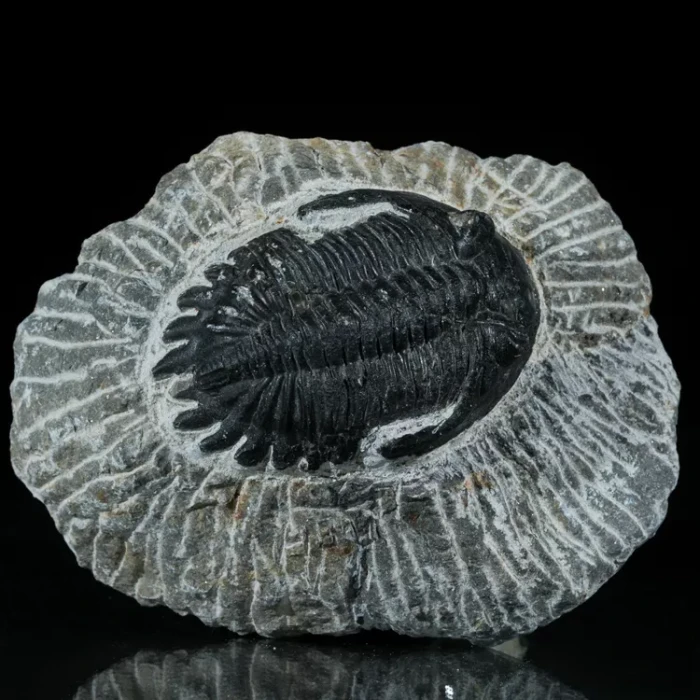
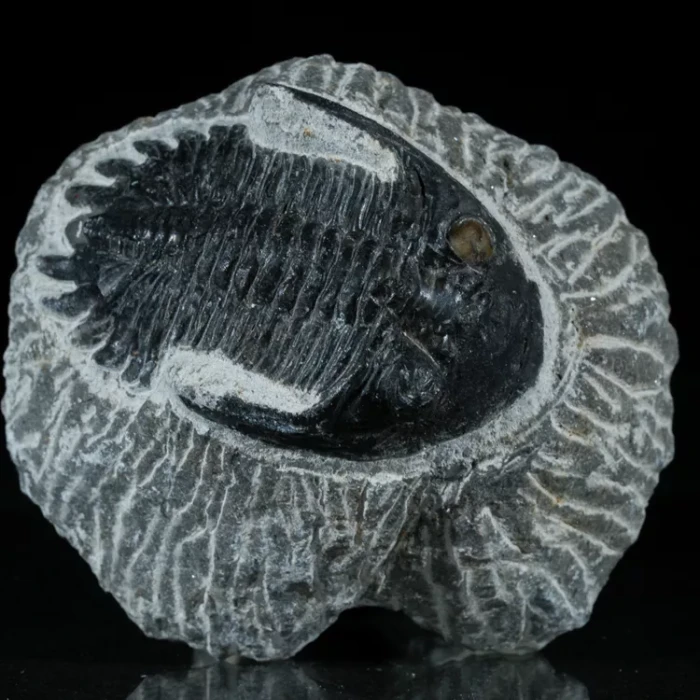
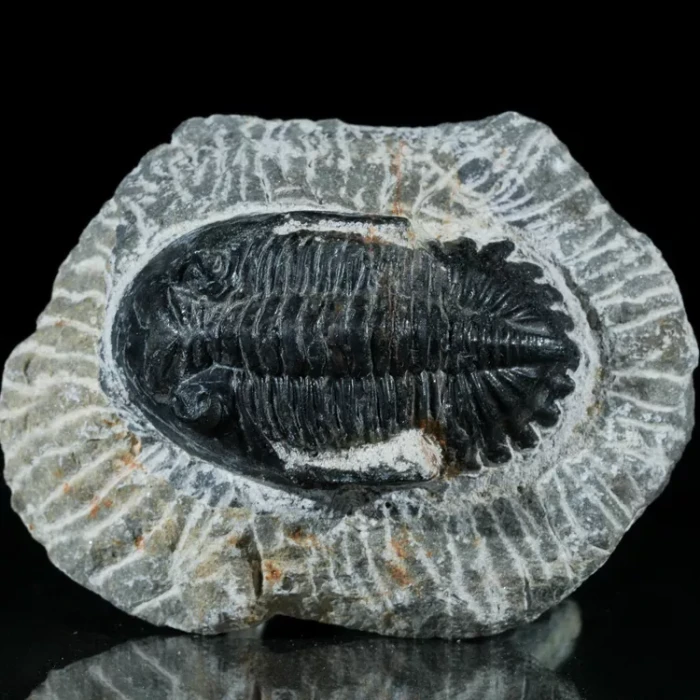
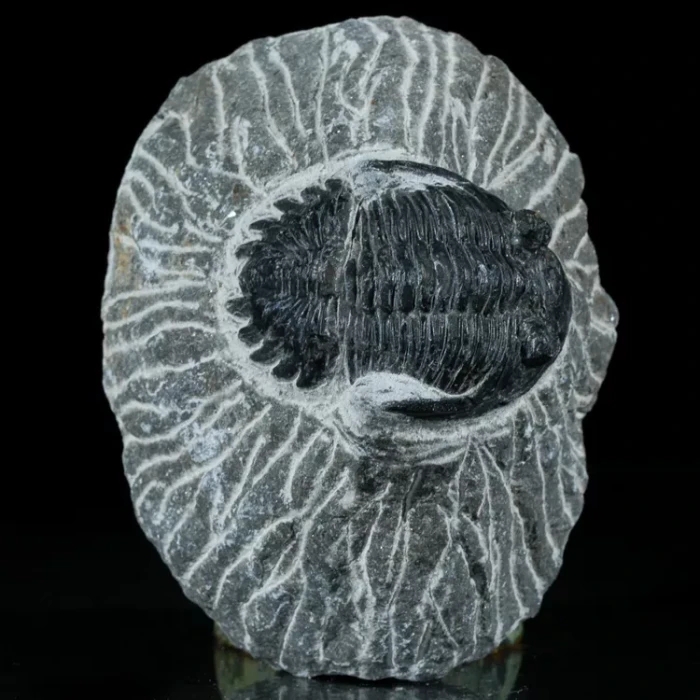
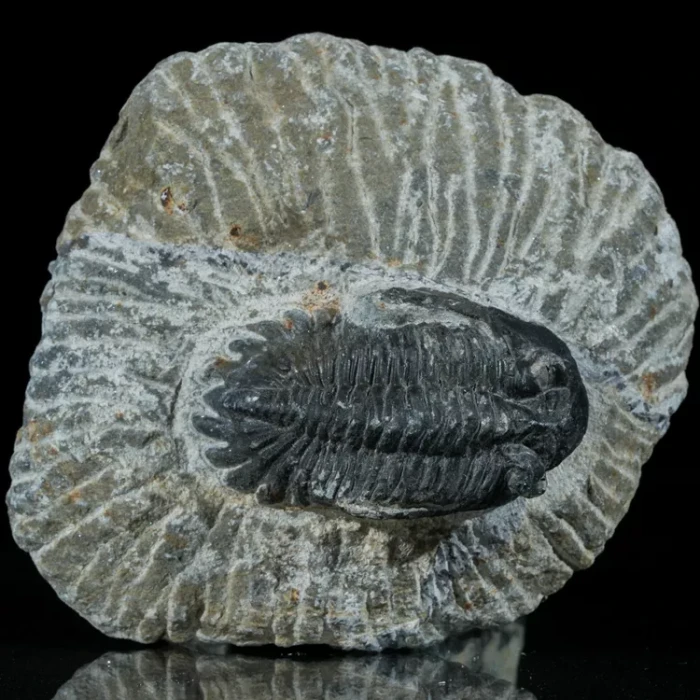
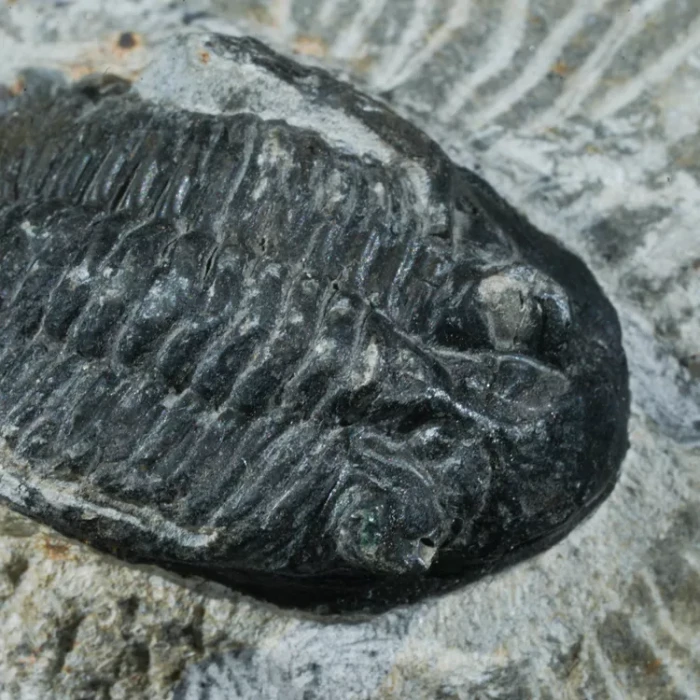
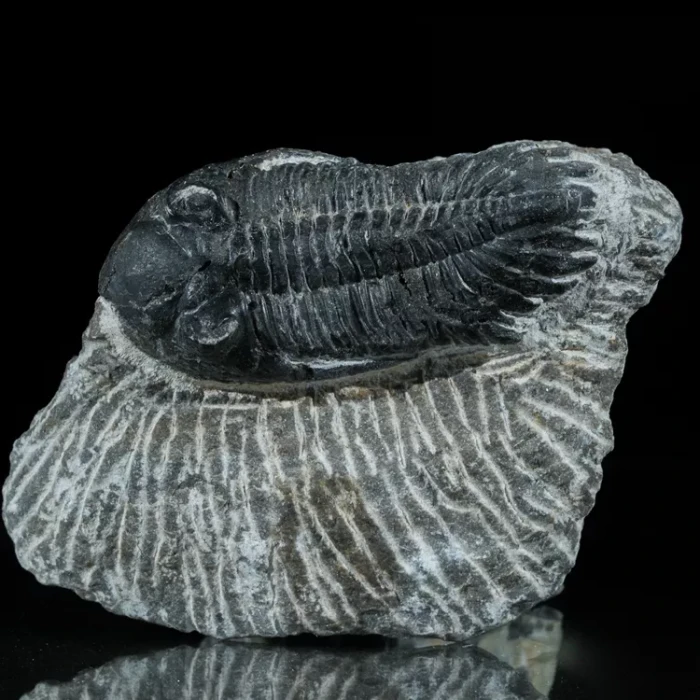
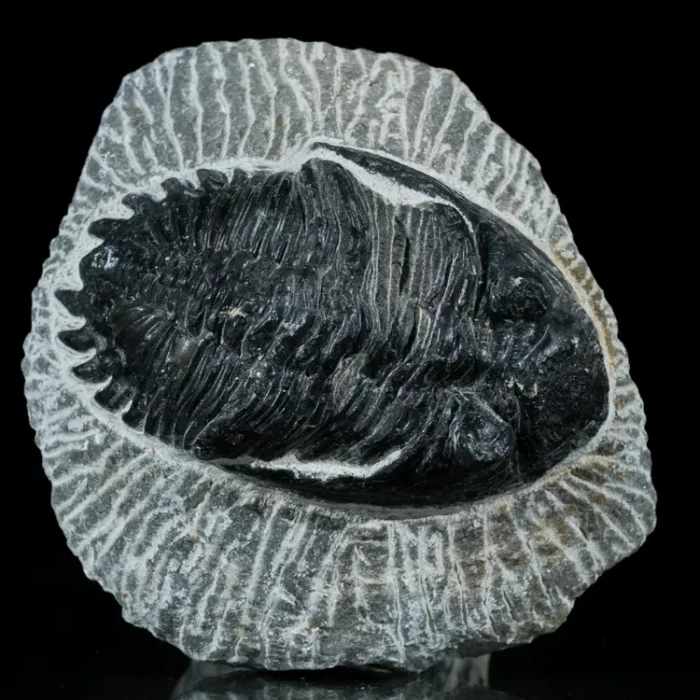
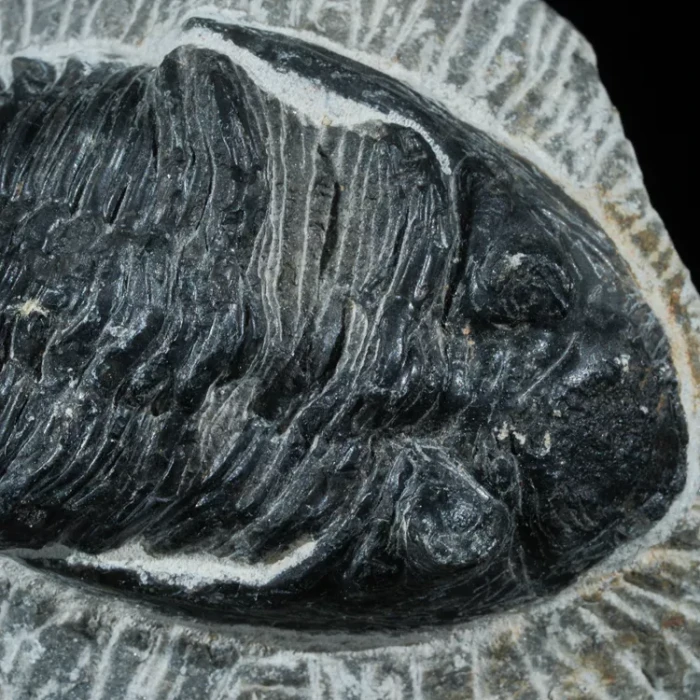
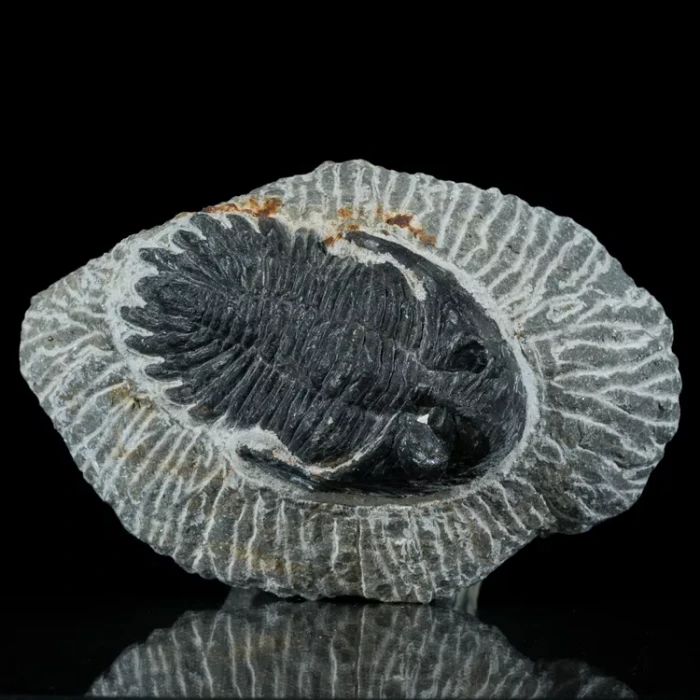
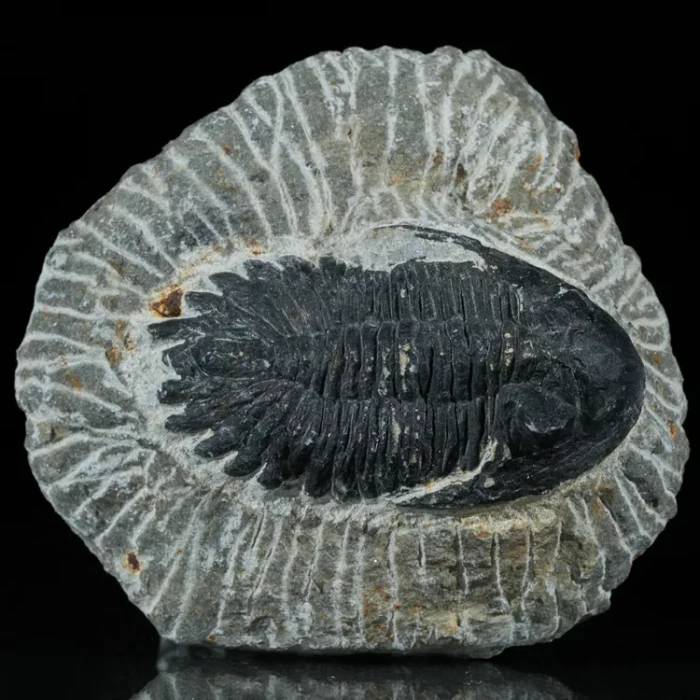
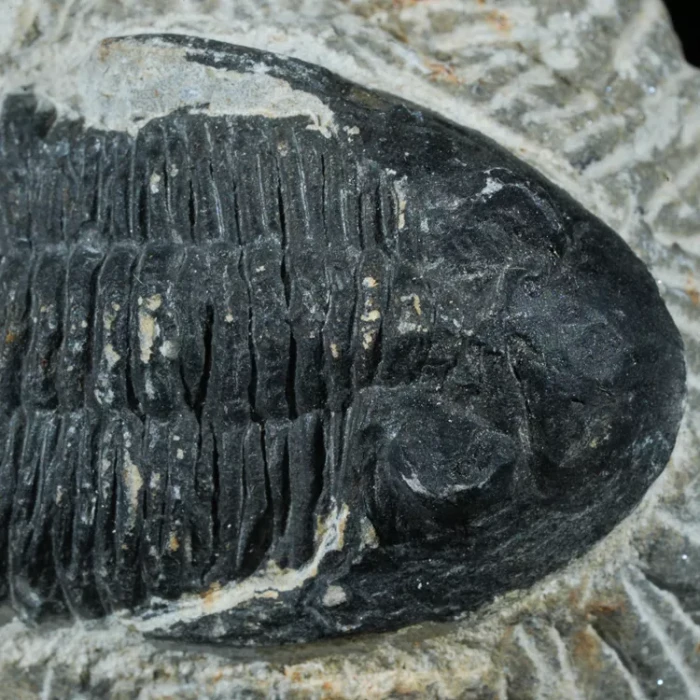
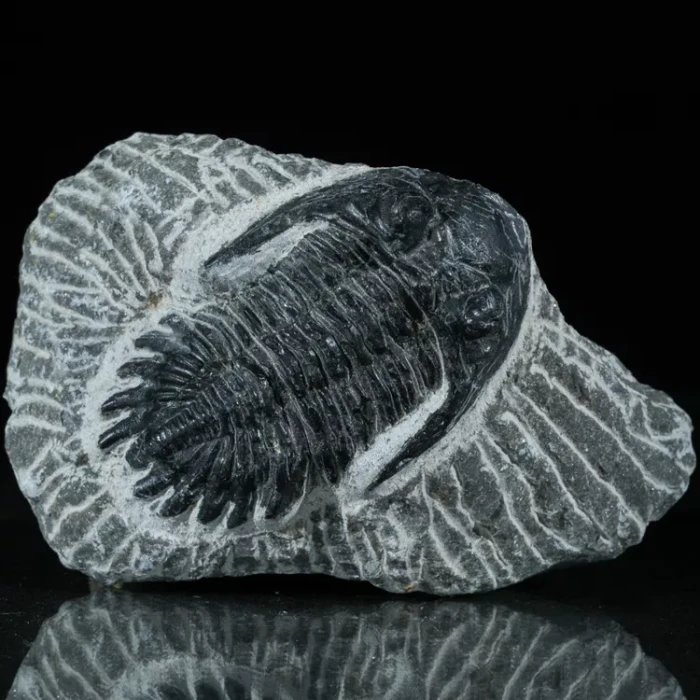
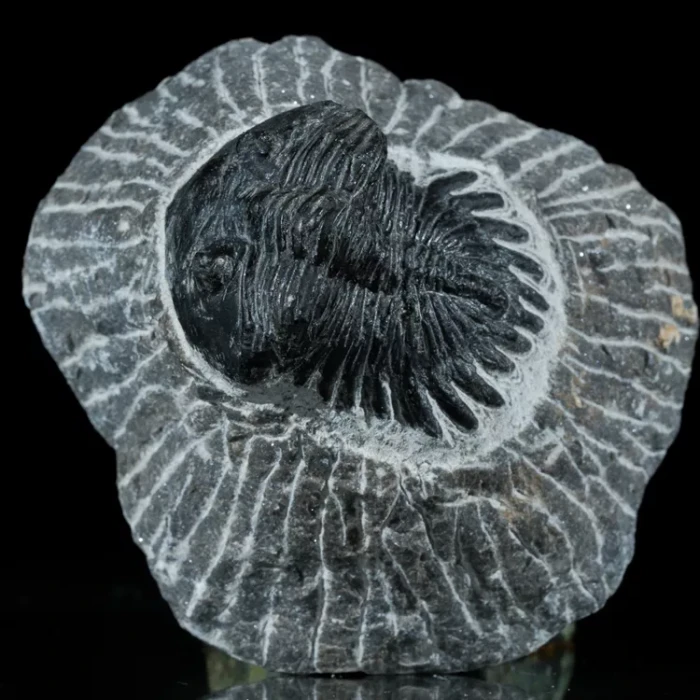
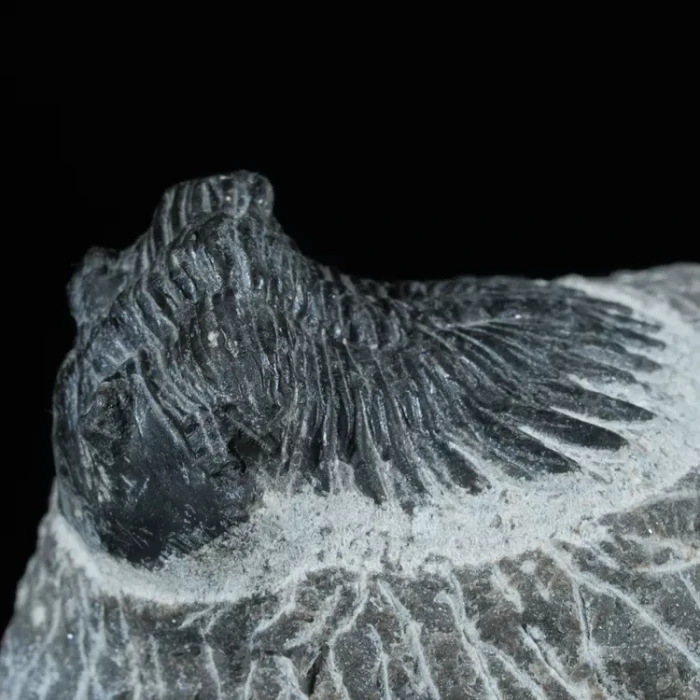
This listing features an outstanding paleontological specimen—a trilobite of the genus Hollardops, preserved in its original limestone matrix. The fossil originates from the famous Devonian sedimentary layers in Morocco, dating back approximately 390 million years. The carapace of this predatory arthropod has been precisely prepared using professional pneumatic chisels, allowing it to stand out proudly from the rock surface. The other side of the matrix has been left in its raw state, ensuring the specimen’s natural and stable embedding in the rock.
Specimen data and specifications:
- ✓ Type: Natural fossil (Trilobite)
- ✓ Genus: Hollardops sp. (order Phacopida)
- ✓ Geological age: Devonian (approx. 390 million years)
- ✓ Trilobite dimensions: Approx. 50 x 32 mm
- ✓ Rock dimensions: Approx. 73 x 55 x 20 mm
- ✓ Total weight: Approx. 162 g
- ✓ Origin: Morocco (Alnif region)
- ✓ Photos: Show the product being offered
Morphology and Characteristics of Hollardops Trilobites
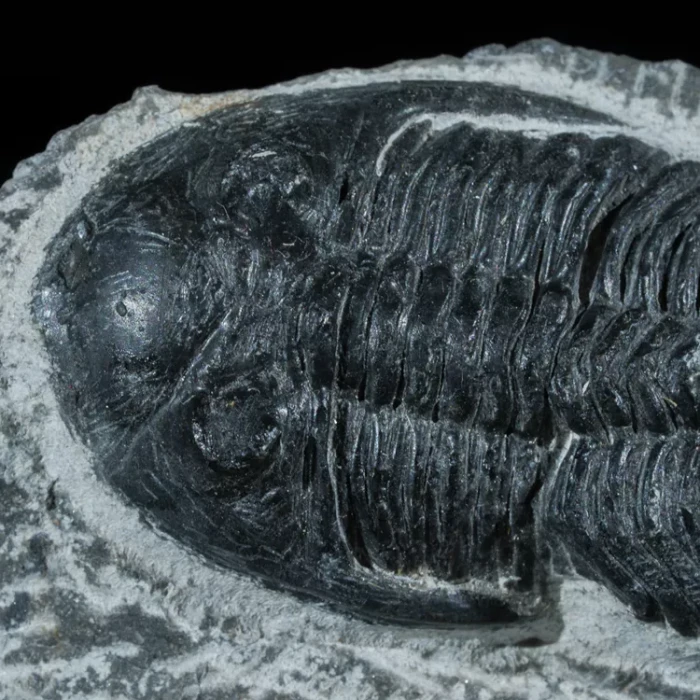
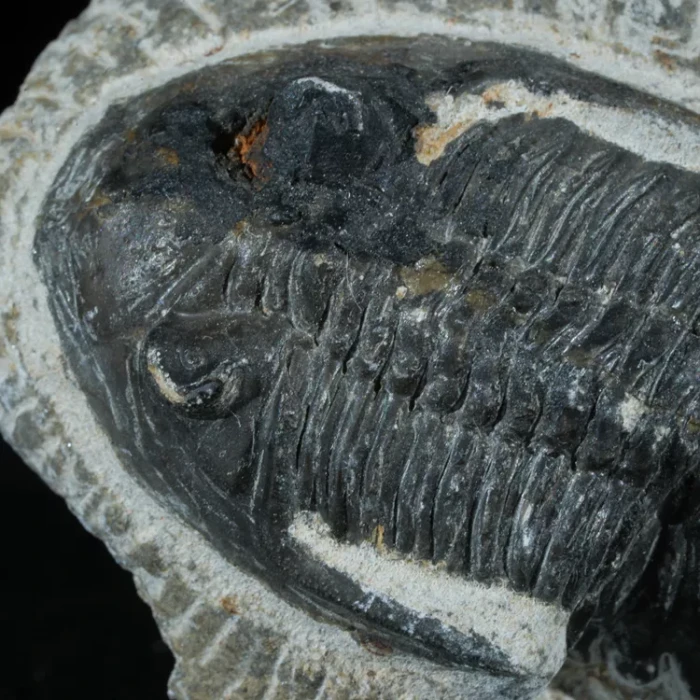
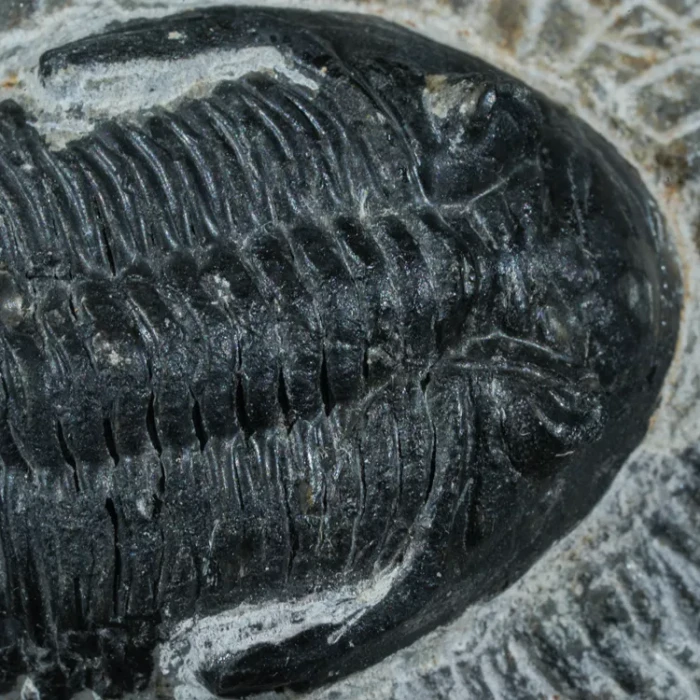
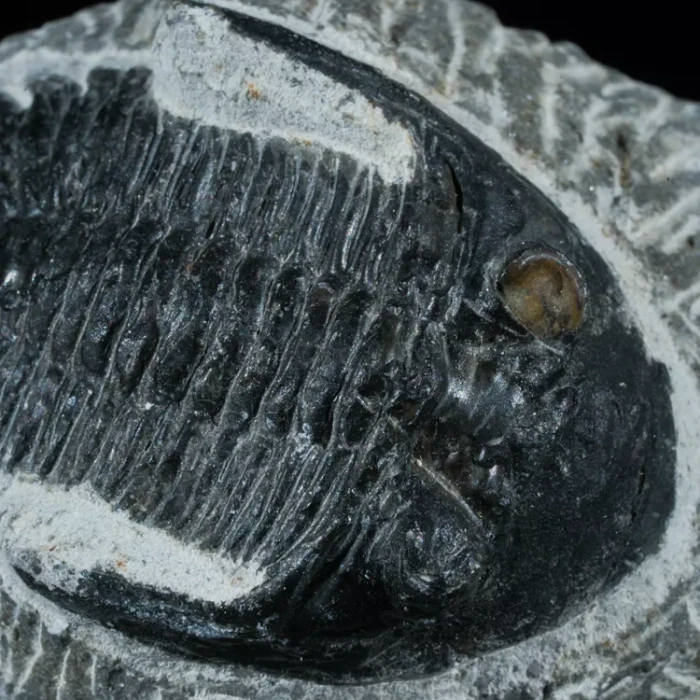
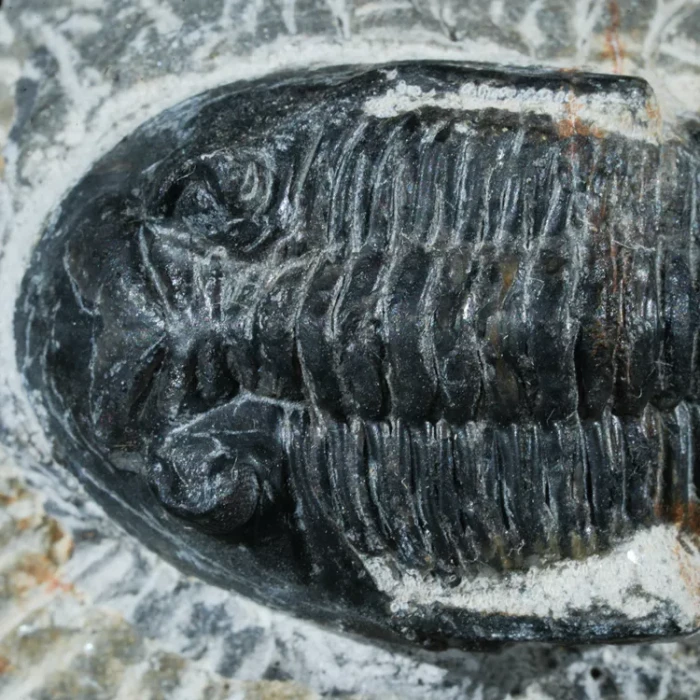
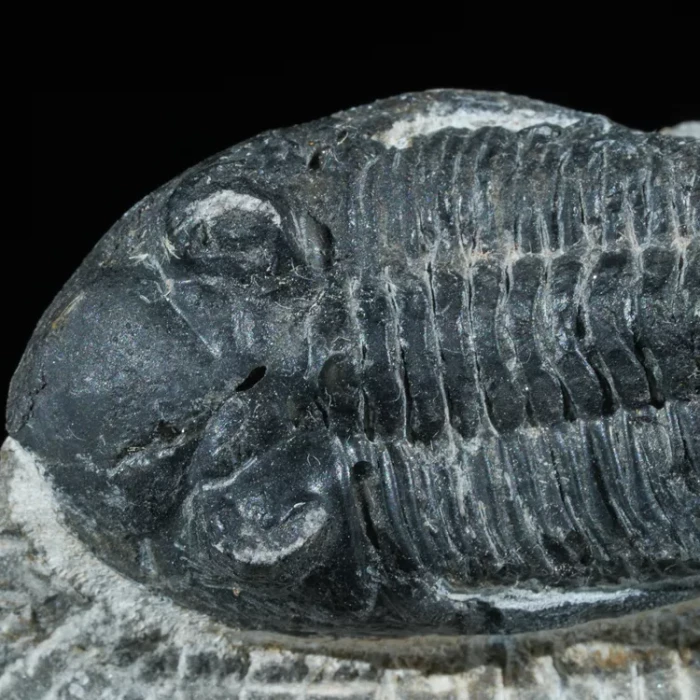
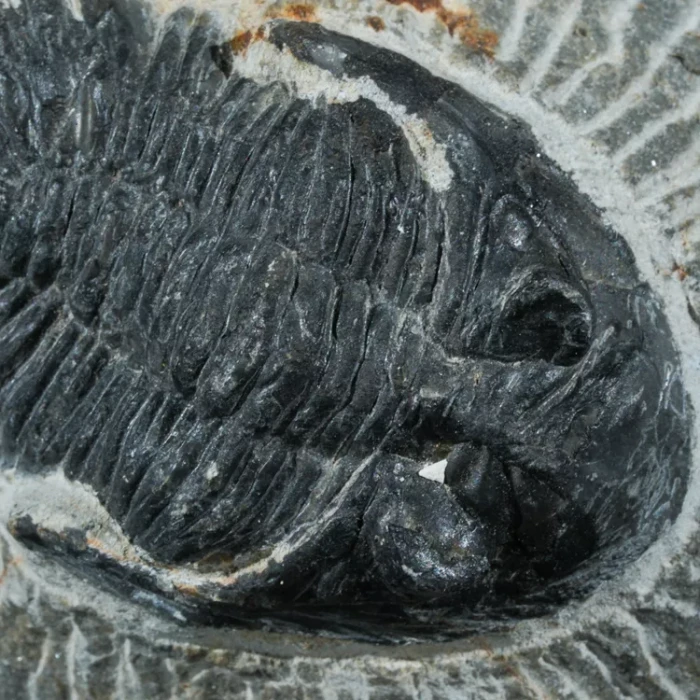
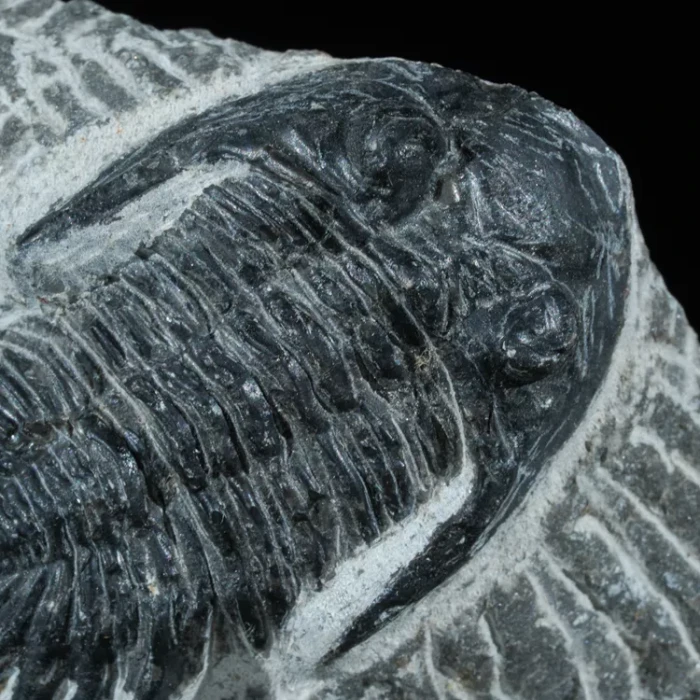
The genus Hollardops, belonging to the order Phacopida, is one of the most sought-after and aesthetically pleasing Moroccan trilobites. These specimens are characterized by an exceptionally distinctive carapace, consisting of a large, broad cephalon (cephalon) with a visible, prominent glabella, and a clearly segmented thorax ending in a pygidium with slightly elongated lateral spines. The most spectacular feature of its anatomy, however, are the large, schizochroal compound eyes, whose crystalline lenses made of pure calcite are often preserved in impeccable condition. The specimen on offer displays perfect symmetry of the carapace, which attests to its high collector’s grade.
The Art of Mechanical Preparation – Why Does the Rock Matrix Matter?
Trilobites mined in Morocco are originally completely embedded in extremely hard limestone. Finding and extracting them requires immense experience, patience, and precise needle-like tools. A well-preserved specimen on its original matrix proves that the carapace was not artificially glued to a random piece of rock, but forms an integral whole with the rock in which it rested for hundreds of millions of years. Leaving the trilobite on its original rock matrix not only enhances its scientific value but also creates a stunning three-dimensional visual effect, making it ready for immediate display in a showcase without the need for additional stands.
Why choose this specimen for your collection?
- 100% Original Carapace: We guarantee the authenticity of the fossil. This specimen is not a plastic cast or a cheap, plaster-carved imitation—it is a genuine witness to the Paleozoic Era.
- Excellent Detail Definition: Precise cleaning of the carapace allows you to see the individual pleural segments and the structure of the trilobite’s head.
- You’re buying exactly what you see: The photos show the specimen being offered, along with its unique arrangement on the host rock.





 Log in with Google